




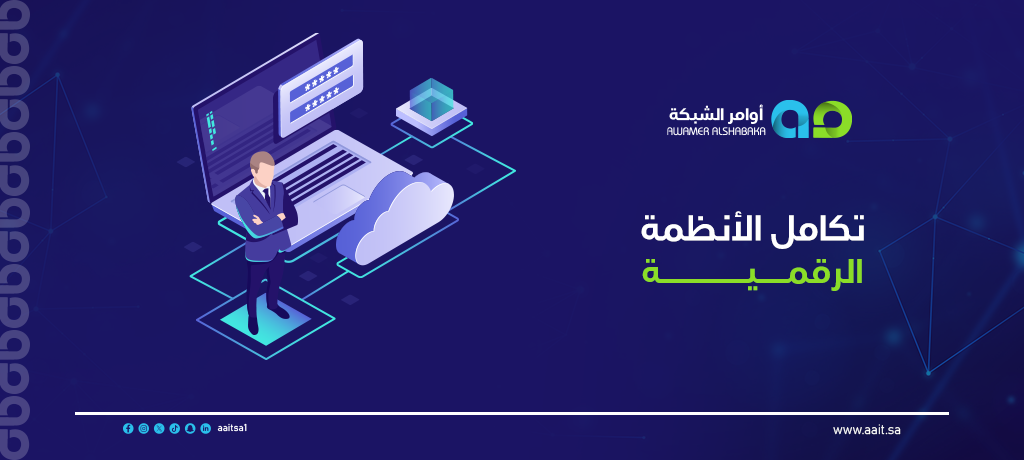
Organizations today rely on a growing mix of digital systems to run their operations efficiently and effectively. As the number of these systems multiplies, the need for true digital systems integration becomes pressing — ensuring workflows run smoothly, errors are minimized, and productivity keeps rising. Awamer Alshabaka delivers innovative solutions that bring together different digital systems, including cloud systems and on-premise infrastructure, making both the user experience and data management far more seamless and consistent.
Breaking Down Silos: Achieving Digital Systems Integration
Many organizations struggle with system isolation, where each platform or application operates independently of the others. This leads to duplicated data and makes it difficult to integrate ERP systems with the rest of the technology stack. The solution lies in building a connected environment where systems can communicate and exchange data efficiently.
Key benefits of digital systems integration include:
- Faster, better-informed decision-making through accurate, up-to-date data.
- Lower costs by reducing manual processes and duplicate work.
- Stronger collaboration across different departments within the organization.
- A unified, consistent experience for both customers and employees.
Awamer Alshabaka provides advanced tools and expertise to integrate disparate systems seamlessly, ensuring unified data and fully connected processes.
Bridging Two Worlds: Cloud-to-On-Premise Integration
With the widespread adoption of cloud applications, companies face significant challenges integrating them with their existing on-premise systems. Cloud-to-on-premise integration allows data to sync seamlessly between two different environments without losing information or disrupting workflows.
Key practices for achieving this type of integration include:
- Using reliable integration platforms that support synchronization between the cloud and on-premise digital systems.
- Designing data flows that are secure and flexible enough to avoid conflicts between systems.
- Testing processes regularly to make sure all applications work together consistently.
This approach to digital systems integration allows organizations to keep using their current systems while still benefiting from the flexibility and reliability of cloud services.
The Universal Language: How APIs Connect Systems
Application Programming Interfaces (APIs) act as the universal language that lets different systems communicate with one another seamlessly. Through APIs, applications can exchange data and send or receive commands automatically, eliminating the need for manual intervention and boosting overall operational efficiency.
These interfaces help connect on-premise systems with the cloud and enable third-party applications to integrate quickly and securely, while keeping data consistent and flowing smoothly across every system used within the organization.
You can learn more about cloud servers for digital transformation from Awamer Alshabaka
Do You Need an Integration Platform as a Service (iPaaS)? A Selection Guide
- Simplified integration: easily connect applications and data across cloud and on-premise environments.
- API management: streamline connections and control data flow.
- Performance monitoring and analytics: real-time visibility into processes and data.
- Flexibility and scalability: support future growth without disrupting existing systems.
- Data security: protect information and stay aligned with regulatory requirements.
- Time and effort savings: reduce manual intervention and speed up integration projects.
Adopting an iPaaS solution lets companies achieve effective digital systems integration while saving significant time and effort in day-to-day operations.
Overcoming Legacy and Modern System Compatibility Challenges
-
Accurately assess current systems:
Identify the strengths and weaknesses of both legacy and modern systems to understand the organization’s actual integration needs, while ensuring no data is lost and no processes are disrupted.
-
Choose flexible integration tools:
Use platforms and tools that support both types of systems, such as iPaaS or APIs, to connect modern and legacy systems without unnecessary complexity.
-
Design a phased migration plan:
Roll out integration in stages, testing each phase and confirming data stability and workflow continuity before moving to the next, to avoid business disruption.
-
Transfer data securely:
Use reliable data migration techniques to ensure data formats are compatible across different systems while preserving data integrity.
-
Train internal teams:
Prepare staff to work with the newly integrated system and understand how to manage data and applications, ensuring operations continue without disruption.
-
Review and update infrastructure:
Upgrade software and hardware as needed to support effective integration between legacy and modern systems while ensuring optimal performance.
-
Rely on integration experts:
Work with specialized firms such as Awamer Alshabaka to achieve secure, effective integration, drawing on their experience managing multiple systems and the technical challenges that come with them.
Ultimately, digital systems integration is no longer optional — it’s a necessity for companies that want to stay competitive and achieve sustainable growth. By connecting on-premise and cloud applications, leveraging APIs, adopting iPaaS platforms, and overcoming the challenges of legacy-to-modern compatibility, organizations can significantly improve productivity and customer experience. Awamer Alshabaka provides comprehensive solutions to achieve this integration securely and seamlessly, empowering companies to make the most of their digital capabilities and reach their goals efficiently.


